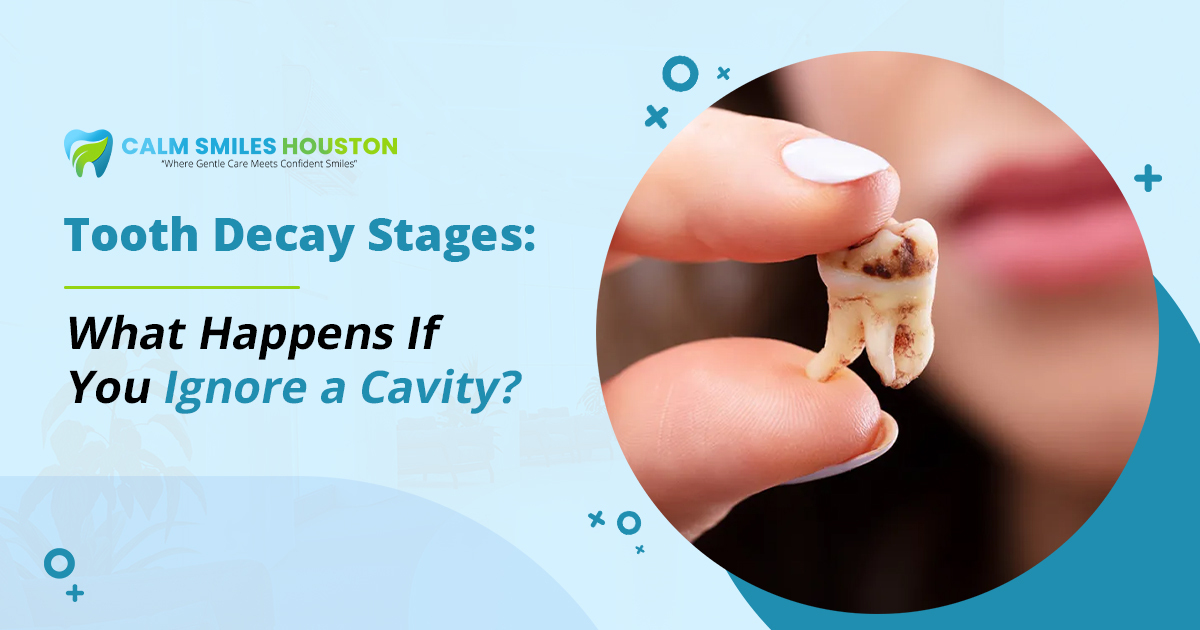
Most people don’t worry much about a small cavity, especially if it doesn’t hurt.
But tooth decay is not something that stays the same. It progresses quietly, moving from the outer layer of your tooth into deeper, more sensitive areas. By the time pain shows up, the damage is often already advanced.
At Calm Smiles Houston, we often meet patients who say, “I wish I had come in sooner.” And that’s exactly why understanding the stages of tooth decay matters. It helps you take action before things become painful, complicated, or expensive.
Let’s walk through what really happens when a cavity is ignored and how you can stop it early.
What Is Tooth Decay (And Why Does It Happen)?
Tooth decay is a gradual process caused by bacteria in your mouth.
Every time you eat sugary or starchy foods, bacteria feed on those particles and produce acid. This acid slowly breaks down your tooth structure, starting from the outer layer (enamel) and moving inward.
Over time, this leads to:
- Weakening of enamel
- Formation of cavities
- Deeper infection if untreated
It’s important to understand this process doesn’t stop on its own. Without proper care, it keeps progressing.
The 5 Stages of Tooth Decay (Step-by-Step Breakdown)
Tooth decay doesn’t happen overnight. It develops in stages, each one more serious than the last.
Stage 1: Demineralization (The Earliest Stage)
This is where everything begins, and most people don’t even realize it.
What’s happening:
Acids from bacteria start removing minerals from your enamel. You may notice faint white or chalky spots on your teeth.
What you’ll feel:
Usually nothing. This stage is painless.
Why is this stage important?
This is the only stage where tooth decay can still be reversed.
What can help:
- Fluoride treatments
- Improved brushing and flossing
- Reducing sugar intake
Regular visits for general dentistry play a key role here, as early signs are often detected during routine checkups.
Stage 2: Enamel Decay (Formation of a Cavity)
If the enamel continues to weaken, it eventually breaks downforming a cavity.
What’s happening:
- Permanent damage to the enamel
- Small holes begin to form
Symptoms:
- Mild sensitivity to cold, hot, or sweets
- Slight discomfort
Treatment:
At this stage, the decay cannot reverse itself. A filling is required to restore the tooth.
Early treatment under restorative dentistry can fix the issue quickly and prevent further damage.
Stage 3: Dentin Decay (Faster Progression)
Beneath the enamel lies a softer layer that allows decay to spread more rapidly.
What’s happening:
- Decay penetrates deeper into the tooth
- The structure becomes weaker
Symptoms:
- Increased sensitivity
- Discomfort while eating or drinking
- Visible cavity or dark spot
Treatment options:
- Larger fillings
- Dental crowns (in more advanced cases)
At this stage, delaying treatment increases the risk of needing more complex procedures later.
Stage 4: Pulp Damage (Infection Reaches the Nerve)
This is when tooth decay becomes painful and serious.
What’s happening:
- Bacteria reach the pulp (the inner part of the tooth)
- Infection begins
- Pressure builds inside the tooth
Symptoms:
- Persistent or throbbing toothache
- Sensitivity to pressure
- Swelling around the gums
Treatment:
Root canal therapy is usually required to remove the infection and save the tooth.
For patients who feel anxious about dental procedures, options like sedation dentistry can make treatment much more comfortable.
Stage 5: Abscess (Severe Infection)
This is the most advanced stage, and it goes beyond just your tooth.
What’s happening:
- Infection spreads beyond the tooth
- A pus-filled abscess forms
Symptoms:
- Severe, constant pain
- Facial swelling
- Fever
- Bad taste in the mouth
Treatment:
- Root canal or tooth extraction
- Antibiotics
At this stage, seeking immediate care through emergency dental care is critical to prevent further complications.
What Happens If You Ignore a Cavity?
Ignoring a cavity might seem harmless at first, but it always leads to bigger problems.
Here’s what typically happens:
- A small cavity grows deeper and wider
- Pain gradually increases
- Treatment becomes more complex
- Costs rise significantly
What could have been a simple filling turns into a root canal or even tooth loss.
Tooth decay does not stop. It only progresses.
Early Signs of Tooth Decay You Shouldn’t Ignore
Many people wait for pain before seeing a dentist, but by then, decay is often advanced.
Instead, watch for these early signs:
- Sensitivity to hot, cold, or sweets
- Dark spots or stains on teeth
- Small holes or rough areas
- Pain when chewing
- Persistent bad breath
If you notice any of these, it’s best to act early.
How Fast Does Tooth Decay Progress?
There’s no exact timeline, but several factors influence how quickly decay worsens:
- Oral hygiene habits
- Diet (especially sugar intake)
- Saliva production
- Frequency of dental visits
In some cases, decay can progress significantly within just a few months.
Tooth Decay in Children vs Adults
Tooth decay can affect anyone, but it often progresses faster in children.
Children may:
- Consume more sugary foods
- Have developing enamel
- Struggle with consistent oral hygiene
That’s why regular visits to pediatric dentistry are essential for early prevention and care.
For adults, decay may develop more slowly, but it can still lead to serious complications if ignored.
How to Prevent Tooth Decay (Simple but Effective)
Preventing tooth decay isn’t complicated, but it does require consistency.
Daily habits:
- Brush twice a day with fluoride toothpaste
- Floss daily
- Limit sugary snacks and drinks
- Drink water after meals
Professional care:
- Regular dental checkups every 6 months
- Professional cleanings
- Early intervention when needed
Small daily habits make a big difference over time.
Why Early Treatment Matters
The earlier you treat tooth decay:
- The simpler the procedure
- The lower the cost
- The less discomfort you experience
Waiting doesn’t save time or money; it usually leads to more extensive treatment.
The Role of Cosmetic Dentistry After Decay
Once tooth decay is treated, some patients may want to restore the appearance of their smile.
Options available through cosmetic dentistry include:
- Tooth-colored restorations
- Smile enhancements
- Aesthetic improvements after treatment
This ensures your smile not only feels healthy but looks great too.
Why Patients Trust Calm Smiles Houston
At Calm Smiles Houston, we believe dental care should feel comfortable, clear, and proactive.
Our approach focuses on:
- Early detection and prevention
- Gentle, patient-first care
- Clear communication about treatment options
- Modern technology for accurate diagnosis
We don’t just treat cavities, we help you avoid them in the future.
Book Your Visit Today
If you’ve noticed any signs of tooth decay or it’s been a while since your last checkup, this is the right time to act.
Calm Smiles Houston
14095 Northwest Fwy, Suite D
Houston, TX 77040
📞 713-460-0400
📧 care@calmsmileshouston.com
Hours:
Monday – Friday: 9:00 AM – 5:00 PM
Saturday: 10:00 AM – 2:00 PM
A simple visit today can prevent serious dental problems tomorrow.
Final Thought
Tooth decay is predictable; it always follows a path from minor damage to serious complications if left untreated.
The good news? You can stop it early.
A small step today can save you from pain, stress, and costly procedures later.